Diagnostic and teardown charges: buy an answer in stages
Set a diagnostic limit, understand teardown and reassembly terms, and know which decision follows each paid investigation.
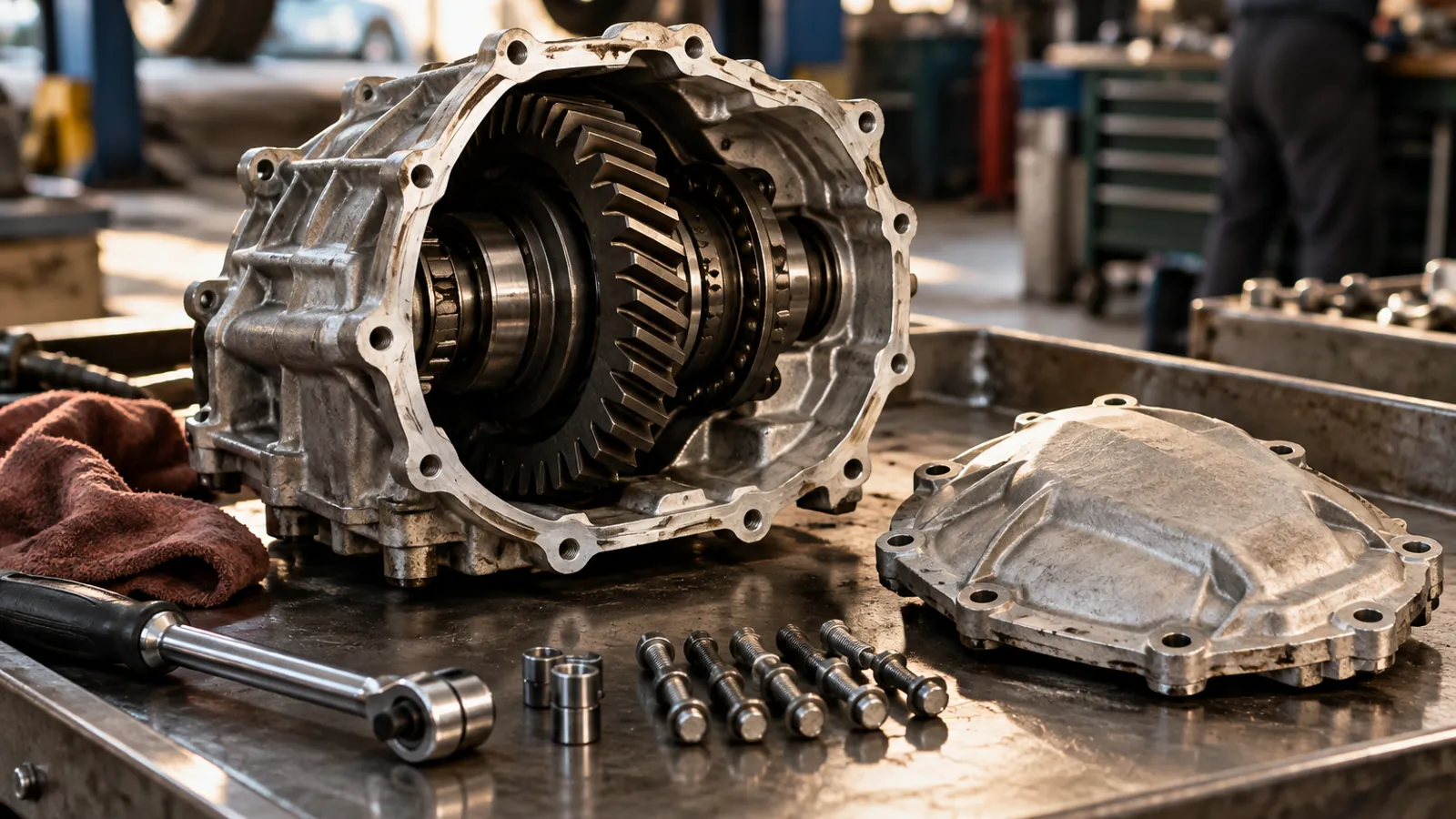
A diagnostic charge pays for investigative work, while a teardown charge pays for an agreed disassembly stage. Neither automatically buys the final repair. Before approval, ask what the work includes, what result you will receive, and what happens if the answer remains uncertain. The useful comparison is not simply whether one shop charges for diagnosis; it is whether the authorized work is clear and relevant to the complaint.
Ask whether the diagnostic charge is fixed or based on time and whether the shop must contact you before exceeding a limit. Request a copy of the findings or a plain-language explanation. A code scan, visual inspection, and further mechanical investigation may be different services. Do not assume a free scan is equivalent to a completed diagnosis.
Create a staged authorization
For an uncertain major repair, use decision gates. A first authorization may cover tests without removal. A later authorization may cover removal or disassembly. Final repair approval should identify the revised scope and total. The exact legal requirements depend on the state, but a written record of each stage is useful everywhere.
- Describe the complaint in the work order.
- Identify the investigative tasks and price or limit.
- Agree on the contact method for further approval.
- Ask what you receive if no repair follows.
- Keep the estimate and any revised authorization.
If the shop cannot yet quote the completed repair, label that uncertainty rather than treating the investigation fee as a promise of the final installed price. Ask what additional information the next stage is expected to establish.
Understand the cost of stopping
Before teardown, ask what it costs to reassemble the vehicle if you decline the repair. Ask whether seals, gaskets, fluids, or other items must be replaced during reassembly and whether the vehicle will be operable afterward. Clarify storage and towing arrangements. A decision that is easy before disassembly may be more expensive after it.
California BAR’s documentation guidance addresses teardown estimates and revised repair authorization. Use it as a California-specific source, not a nationwide rule. Outside California, check the consumer agency or repair regulator for your state. If the shop proposes a waiver or an open-ended authorization you do not understand, ask for an explanation before signing and obtain legal advice where necessary.
Illustrative cost of declining
Assume a hypothetical teardown is $450, reassembly after declining is $250, and towing is $120. These are illustrative inputs only. Declining after teardown could require $450 + $250 + $120 = $820, before any other agreed charges. The point is to identify the exit cost in advance, not to suggest what a real shop should charge.
If you instead approve a repair, ask whether the $450 is included in the final labor total, credited separately, or added on top. Do not subtract it twice. Keep the original and revised estimates side by side and mark each charge as carried forward, credited, or replaced. That record is more reliable than remembering an informal statement that diagnosis would be taken care of.
When the findings change
A revised finding is not automatically evidence of wrongdoing. Disassembly may reveal information unavailable before access. The important questions are what changed, how the evidence affects the recommendation, how the price changes, and whether further work awaits your approval. Request photographs or measurements if the shop can provide useful documentation, while recognizing that a picture alone may not establish a technical cause.
If the revised proposal is unaffordable, ask about reassembly, transport, and storage before delaying a decision. Do not abandon the vehicle or assume charges stop while you seek another opinion. For a disputed bill, preserve the work orders and messages and consult the relevant state agency. This guide cannot determine whether a particular authorization is legally enforceable.
Request a useful diagnostic handover
Ask what information you will receive after the investigative stage. Depending on the work, that may be an explanation of tests, observations, measurements, or the reason further access is needed. Do not demand a particular test from an internet checklist; ask the professional how its proposed procedure addresses your complaint.
If the diagnosis remains uncertain, request a distinction between what has been ruled out and what has not yet been inspected. That distinction can justify a next stage without pretending a conclusion is final. Ask how the next paid step changes the decision and whether the result could lead to more than one repair option.
If you decline further work, obtain the findings and the vehicle’s return condition in writing where possible. Another shop may still need to repeat tests, but a clear handover can prevent avoidable confusion. Keep the paid diagnostic invoice even when no repair follows; it documents what investigation you actually purchased.
Questions before you decide
Must diagnosis be free?
Do not assume it is free. Ask for the diagnostic scope and price before the work begins.
Does teardown authorize repair?
It should be treated as a separate scope unless the agreement clearly says otherwise. Confirm the next approval point in writing.
Can I move the vehicle after teardown?
Ask the shop about its condition, reassembly requirements, towing, and charges. It may no longer be ready to drive or easy to transfer.
Continue with the same decision
- Transmission and engine repair cost: start with the scope
- Transmission rebuild vs. replacement: compare the actual work
- Engine repair vs. replacement: what does the estimate include?
- Compare repair approaches
- Use the labor and parts worksheet
Official sources and limits
- Federal Trade Commission — Auto Repair Basics — written estimates, repair terminology, and warranty questions.
- California Bureau of Automotive Repair — Write It Right — California-specific documentation and authorization guidance.
Source links checked October 30, 2026. Dollar examples are illustrative, not surveyed prices. State-specific requirements are labeled and must be checked for the location of your repair. No licensed mechanic or attorney has reviewed this guide.